

Table of Contents
- How Does Fault Work in a Car Accident Case?
- What Can We Use to Prove Fault if There Are No Eyewitnesses?
- Personal Injury Attorneys Can Help When It’s Word Against Word in Car Accident Cases
- Contact The Brown Firm After a Car Accident
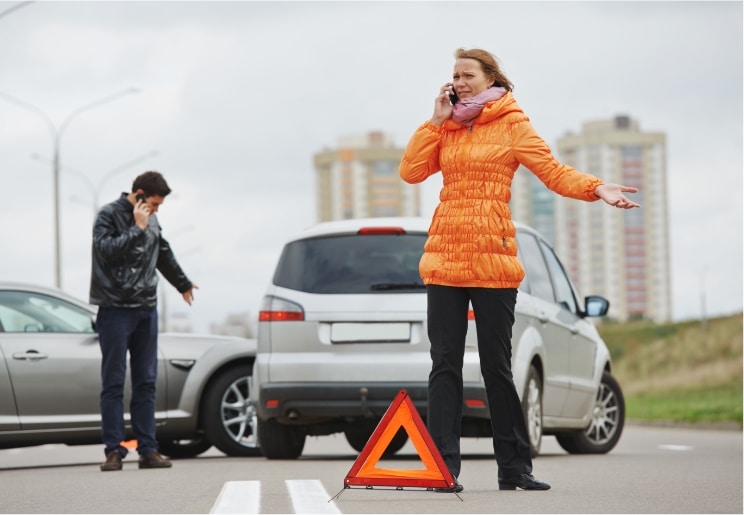
The first question after a car accident is usually “Who was at fault?” Witnesses are often a major part of determining fault, especially if they weren’t at all involved and don’t know those who were.
But what happens when there aren’t any witnesses? As far as the law is concerned, one driver’s word isn’t any better than the other’s, so how do officers, attorneys, and insurance companies get the answers they need while investigating the car accident claim?
In this post, we’ll share some ways that fault, or a lack thereof, is determined after a car accident with no witnesses. We’ll also highlight how an experienced personal injury attorney can help the entire process go more smoothly.
I met with Harry Brown personally and he sat with me for 20 minutes at our initial consultation to explain everything. He even called after my surgery to see how I was doing. I met with him several more times after that and was kept informed about my case throughout. I highly recommend Harry Brown as an attorney.
STEVEN SWEENY, SAVANNAH
How Does Fault Work in a Car Accident Case?
After a car accident, the involved parties may be held fully at fault, partially at fault, or not at fault. Anyone who bears fault can be responsible (liable) for the costs in some manner.
Let’s break that down a bit for clarity.
Is Georgia an At-Fault or No-Fault State?
In most personal injury cases, compensation comes from insurance companies, not the pockets of individuals. Fault status dictates how those insurance policies work, and whether injured people file claims with their own insurance carrier or the other drivers’.
Georgia is an at-fault state, as is South Carolina. This means that a person who causes a car accident—usually the at-fault driver—is liable for the costs of the people they injured when the accident happened. The injured parties have the right to sue them for this compensation (which, again, comes from the insurance company a vast majority of the time).
At-fault drivers may also face criminal charges, but that would be a separate case and not handled by your personal injury lawyer.
In a no-fault state, all drivers are required to carry a minimum amount of no-fault insurance that will cover their injuries if they’re involved in an accident. It will depend on whether the at-fault driver has additional liability insurance that the injured party may be able to recover.
What Does Negligence Mean in a Personal Injury Case?
Your personal injury claim will hinge on proving the at-fault party’s (defendant’s) negligence—or in other words, their failure to take reasonable care to prevent another person’s injury or loss.
The following components must be shown to both prove negligence and receive compensation personal injury case:
- The defendant had a duty of care to you: Circumstances dictate duty of care. Drivers certainly have a duty of care to other people on the roadways.
- The defendant breached their duty of care: Being careless quickly leads to neglecting a duty of care.
- That breach caused the accident and injury: Drivers are careless all the time, but it doesn’t always lead to accidents. Further, accidents can happen with no one being negligent. If records show that a driver was distracted at the time of the accident, it’s safe to say their breach caused the accident and injuries.
- Your injuries resulted in loss: Your injuries/damages will dictate the size of the claim you may have against the at-fault driver. Other damages can also add to your claim. This generally means medical bills and other costs.
What Is Comparative Fault?
Comparative fault, also called comparative negligence, is a legal principle that allows more than one party to be held to some percentage of the fault in a car accident. It then uses those percentages to determine how much compensation injured parties can receive.
For example, say you’re in an accident that another driver caused by turning left as you went through an intersection when you had the right of way. Clearly, that driver bears the majority of fault for the car accident (and the broken bones you have because of it).
However, you were also driving 10 miles over the speed limit, contributing to the other driver’s poor judgement. It’s determined that you are 20% at fault for the car accident.
Remember when we said that anyone bearing fault can be liable for the costs somehow? Your 20% share of the fault means you are only eligible for 80% of the compensation you’d get if you were 0% at fault, even though the other driver was the main cause of the accident that injured you.
So, if full compensation for your injuries is $100,000, you can only get $80,000.
Georgia and South Carolina both observe modified comparative negligence. This means there is a limit to how much fault you can bear and still be eligible for compensation:
- Georgia modified comparative negligence: If you are 50% or more at fault, you are not eligible for compensation.
- South Carolina modified comparative negligence: If you are more than 50% at fault, you are not eligible for compensation.
In a state with pure comparative negligence, you would still be eligible for compensation even if you were 99% at fault for a car accident. (Though in this case, you’d only be able to receive 1% of your full claimed damages.)
RELATED: Prove I’m Not at Fault in a Car Accident

Ready to Talk to a Lawyer Who Has Your Back?

What Can We Use to Prove Fault if There Are No Eyewitnesses?
Again, witnesses and their contact information are always helpful when it comes to unbiased information on what happened. If your car accident had no witnesses, however, there are other pieces the insurance company will look at, and that your lawyer can used to prove another driver’s liability.
Police Report
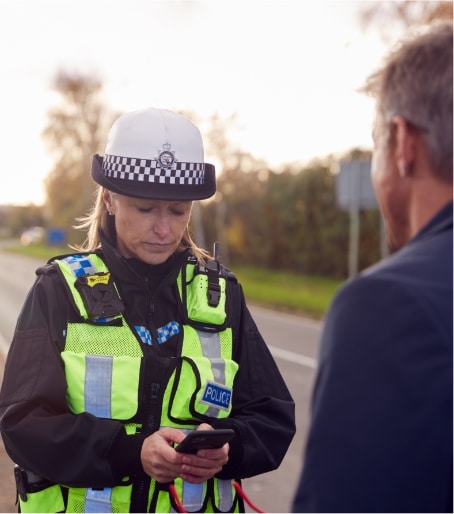
You should always call the police from the scene of a car accident. When they arrive, they’ll do their best to understand what happened based on what they see and hear. If you believe another driver broke a traffic law to cause the accident, be sure to mention that to the police officer.
Insurance companies and attorneys may use police reports to help with the investigation and decisions. Yet, a police report is not generally allowed as evidence in a court case (exceptions may be made in certain situations).
Photos and Video
If possible, take photos of your injuries and property damage at the scene of the accident. While it’s unlikely that you’ll have video of the event (unless you have a dash cam), find out if a traffic or security camera might have caught it.
Ensure that your photos accurately represent reality so they will be allowed as evidence. Don’t use visual tactics to make things look bigger or smaller or alter the scene in any way.
Damage to Vehicles and Surrounding Area
Take pictures of the entire scene of the car accident, and close shots of damage to surrounding vehicles, trees, poles, etc. Look for skid marks and any other representations of where the cars were and how they behaved.
Many lawyers work with accident reconstructionists to “recreate” the accident based on what they know about the vehicles, the direction and speed of travel, and other factors.
RELATED: Should I Take the First Settlement Offer in My Personal Injury Case?


Personal Injury Attorneys Can Help When It’s Word Against Word in Car Accident Cases
Taking on a personal injury case on your own is always risky. In a car accident case without witnesses, where proving fault is complicated, you need someone who’s experienced with the law and knows how to build a solid case.
Typically, the insurance company of the at-fault party will investigate the accident to determine who is at fault and how much. Of course, the other driver’s insurance company is looking to wrap up the claim as quickly and inexpensively as possible, leaving room for bias to creep in and offer a lower settlement than you deserve.
A car accident lawyer will often have connections with experts, like accident reconstructionists and medical experts, who can help determine what happened and who was at fault. They’re also adept at negotiating when the insurance company tries to offer a lowball settlement amount.
Contact The Brown Firm After a Car Accident
If you or someone you love are concerned about proving fault after a car accident, reach out to a law firm with decades of experience and a compassionate approach. Our team is experienced with cases where proving fault might be a challenge, and we’re ready to hear your story.
We begin every attorney-client relationship with a free consultation, where we get to know more about your case and determine the best path forward. We’ve got offices in Savannah, Atlanta, Athens, and Okatie. Call (800) 529-1441 or use the easy contact form on our site to set yours up today!
References
Georgia contributory negligence laws. (n.d.). Enjuris. Retrieved from https://www.enjuris.com/blog/ga/georgia-contributory-negligence/
Goguen, D. (n.d.). Police reports as evidence in your car accident injury case. Retrieved from https://www.alllaw.com/articles/nolo/auto-accident/police-reports-evidence-personal-injury-case.html
The content provided here is for informational purposes only and should not be construed as legal advice on any subject.
Our Recent Personal Injury Articles
The Brown Firm Wins Multiple Claims After Client’s Double Accident
Keely was rear-ended on the interstate, and then hit again by someone who was trying to help. Find out how The Brown Firm helped her get compensation.
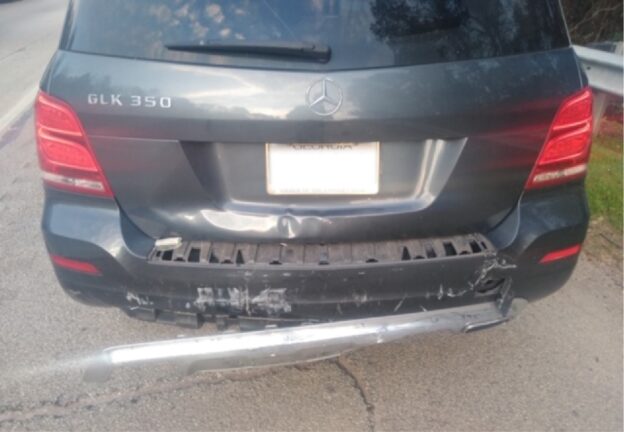
Turning a Case Around After an Inaccurate Police Report
Shirley was wrongfully faulted for an accident she didn’t cause, and other lawyers wouldn’t help. Learn how The Brown Firm dug deeper to turn her case around.

Do Insurance Companies Hire Private Investigators?
Injured people may be surprised when they’re followed by a private investigator, but it does happen. Learn how to protect your case, and how a lawyer can help.

Who Is at Fault in an Unprotected Left Turn Accident in Georgia?
Wondering if a car making a left turn is always at fault in an accident? Find out now. The Brown Firm discusses right of way laws and common exceptions to…

Who Gets the Money From a Wrongful Death Lawsuit in Georgia or South Carolina?
Questions about wrongful death are common, and the answers vary depending on which state the case takes place in. Learn more about wrongful death cases in Georgia and South Carolina.

How Do You Recognize a Distracted Driver? (And What Should You Do if You’re Hit by One)?
We take a look at what distracted driving is, how to tell if another driver is distracted, and what you can do if you are injured in an accident with…

Does Not Wearing a Seatbelt Affect Your Insurance Claim After a Car Accident?
Even if you’re not at fault for a car accident, not wearing a seatbelt can affect your injury claim. Learn what it means for your case and how a lawyer…
What Is a Fair Settlement for a Motorcycle Accident in Georgia?
Motorcycle accidents often cause serious physical injuries, as well as pain and suffering. Make sure your settlement amount fairly compensates you for your damages.

Should I Take the First Settlement Offer in My Personal Injury Case? (And How to Handle a Lowball Settlement Offer)
An unexpectedly low settlement offer can cause significant anxiety if you’ve been injured. In this blog, we examine the best ways to respond.
Winning for an Injured Passenger with Compassion and Persistence: Jaclyn’s Story
Jaclyn faced injuries, bills, and more after being hurt in an accident her driver caused. Learn how our persistence helped her win the money she deserved.
CONTINUE READING
View All Articles
Contact The Brown Firm
Get the Answers and Compensation You Deserve
You’ll notice the difference when you contact The Brown Firm! Our local dedicated attorneys want to help you recover and rebuild. We serve all of Georgia and South Carolina from four conveniently located offices in Savannah, Atlanta, Athens, and Okatie.
Schedule your free consultation by calling (912) 324-2498 or completing our simple online form.
[gravityform id=”3″ title=”false” description=”false” ajax=”true”]