

Table of Contents
We’ve all been there.
We’re sitting in rush hour traffic, and it’s been bumper to bumper for what feels like hours.
Now a person in on-coming traffic wants to make a left in front of your car.
So, you decide to be helpful. You aren’t going anywhere anyway.
So you stop, and you don’t move forward in traffic when the car in front of you does, opening a path for the person wanting to make a left across both lanes of on-coming traffic.
You give a polite wave to the person letting them know they can cross in front of you.
But, there’s a car traveling in the lane to your right that doesn’t see the turning car, and the turning car doesn’t see it.
So the driver making the left doesn’t see the car, turns in front of it, and gets t-boned.
You can’t be sued or held responsible for this accident, can you? You were just trying to be nice.
In the article below, we will talk about your responsibility in a car accident if you deice to wave a car through.
Related article: Things to never say at a car accident
I met with Harry Brown personally and he sat with me for 20 minutes at our initial consultation to explain everything. He even called after my surgery to see how I was doing. I met with him several more times after that and was kept informed about my case throughout. I highly recommend Harry Brown as an attorney.
STEVEN SWEENY, SAVANNAH
Waving Another Driver Forward
Everyone has waved another driver on at one time or another.
It happens all the time at intersections or in heavy traffic.
You’ve noticed a poor soul who wants to find a break in the traffic and make his or her way home from work, so you decide to help them out.
You stop your car and give a little wave, letting the other driver know they can move ahead.
This might make you a nice person. The other driver is undoubtedly grateful, but this also opens you up to legal liability.
If another car comes along and drives ahead after you wave a driver on, hitting the car you just waved into traffic, you could be held partially responsible for the accident.
When juries are looking at car accidents, they have to consider whether or not a defendant has any legal duty of care in a situation.
Every time you get behind the wheel of your car, you have a duty of care to be a responsible driver.
If you wave another driver through, a jury may decide that you voluntarily took on some additional responsibility for another driver when you waved them into traffic.
Some states use comparative negligence, which means that juries have to decide precisely how much each party in an accident is responsible.
These cases often aren’t easy to resolve and could result in a lot of legal wrangling in court.
Unfortunately, there’s only one way to make sure you aren’t held liable for an accident.
Even if it goes against your instincts, and that driver has been waiting to turn for a while, don’t try to help them out by waving him or her into traffic.
If the roles are ever reversed, don’t accept another driver’s wave as assurance that the way is really clear.
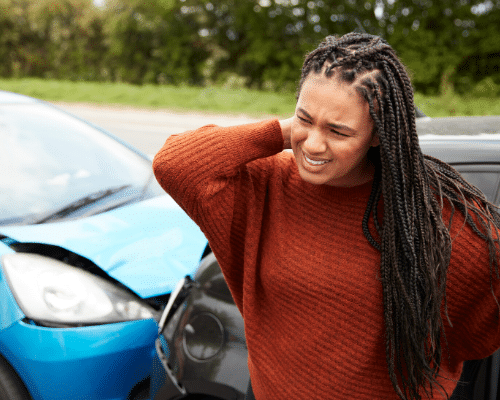

Nodle Brothers vs. Wray
In 1980, the Virginia Supreme court adopted a principle from the Nolde Brothers v. Wray trial.
During the trial, the court stated found that, “If a driver’s waving signal was or could be interpreted to another driver as a signal to proceed across lanes of incoming traffic, then the driver who waves has to be certain the other driver can cross safely.”
The court reasoned that the driver who received the wave was able to see that the other driver was not positioned to see whether there were any vehicles in the other lanes of traffic.
Ten years later, the Virginia Supreme Court confronted the waving issue again.
In Ring v. Poelman, a driver in the left lane of traffic struck a car that pulled out in front of it.
The car came from behind a line of traffic stopped in the right lane.
The driver of the car pulling out claimed that the stopped driver in the right lane waved him out.
But unlike Nolde Brothers v. Wray, the court found that the driver giving the signal “was positioned that the jury reasonably could find that he could have and should have seen the danger of traffic approaching from the rear in the left turn lane.”
If that was true, and the jury found that the driver being waved out reasonably believed that the wave was a signal to proceed into the left turn lane, the waving driver would have been found liable.
If you ever wave another car in front of you, you could be found liable if an accident or injury occurs.
Even though it seems like a nice thing to do, you do not want your well-intentioned actions to lead to an accident and injuries.
If you want to help, avoid making a wave.
You can leave a gap, giving them the option to go through, but don’t make eye contact or wave people in because you may be held liable.
Waving someone through can indicate that it’s safe, which means you’re assuming liability.
[xyz-ips snippet=”Related-Post”]
Contact The Brown Firm
Drivers who wave another car in front of them could be found liable if a car accident occurs.
Helping someone through traffic can feel like a nice thing to do, but you never want your well-intentioned actions to lead to an accident.
The best advice in these situations is to never wave someone into traffic.
As mentioned above, you can leave a gap and let them in, but never make eye contact or wave people in.
Waving or gesturing can indicate that it’s safe, which then means you’re taking on a duty/responsibility.
If you’ve recently been involved in a car accident that involved one driver waving another driver into traffic, you should contact a car accident attorney.
The Car Accident Attorney at The Brown Firm have been helping car accident victims for years, and they can help you with your case.
For a free consultation with The Brown Firm, click the button below.
Ready to Talk to a Lawyer Who Has Your Back?
Our Recent Personal Injury Articles
Stay Safe This Winter: Wintertime Driving Tips
In the winter, we get a wide variety of weather patterns. Since it’s Georgia, the weather is particularly unpredictable. You can have everything from 75 degrees and sunny to below…
How Much are Slip and Fall Accidents Worth?
Table of Contents What Are Slip and Fall Cases? Proving a Slip and Fall Case Types of Compensation Available How Long do Slip and Fall Cases Take to Settle? Settling…
Frequently Asked Questions About Truck Accidents
Table of Contents What Are Slip and Fall Cases? Proving a Slip and Fall Case Types of Compensation Available How Long do Slip and Fall Cases Take to Settle? Settling…
What Constitutes Neglect in a Nursing Home?
Table of Contents What Are Slip and Fall Cases? Proving a Slip and Fall Case Types of Compensation Available How Long do Slip and Fall Cases Take to Settle? Settling…

Answers to Frequently Asked Personal Injury Questions
Table of Contents What Are Slip and Fall Cases? Proving a Slip and Fall Case Types of Compensation Available How Long do Slip and Fall Cases Take to Settle? Settling…
Are Car Accident Cases Different if Children are Involved?
Table of Contents What Are Slip and Fall Cases? Proving a Slip and Fall Case Types of Compensation Available How Long do Slip and Fall Cases Take to Settle? Settling…
What Qualifies as Wrongful Death?
Table of Contents What Are Slip and Fall Cases? Proving a Slip and Fall Case Types of Compensation Available How Long do Slip and Fall Cases Take to Settle? Settling…
Do Most Slip and Fall Cases Settle Outside Of Court?
Table of Contents What Are Slip and Fall Cases? Proving a Slip and Fall Case Types of Compensation Available How Long do Slip and Fall Cases Take to Settle? Settling…

What Qualifies As Wrongful Death?
Table of Contents When is a Wrongful Death Claim Applicable? Who Can File a Wrongful Death Lawsuit? How Do You Prove Wrongful Death? Damages in a Wrongful Death Case Let…

Are Car Accident Cases Different If Children Are Involved?
Table of Contents Injuries to ChildrenPotential Recoverable DamagesHow Car Accident Claims Are Different for ChildrenMinors Have Extended Statute of LimitationsMinors Aren’t Allowed to File a Personal Injury ClaimGet a Free…
CONTINUE READING

View All Articles
Contact The Brown Firm
Get the Answers and Compensation You Deserve
You’ll notice the difference when you contact The Brown Firm! Our local dedicated attorneys want to help you recover and rebuild. We serve all of Georgia and South Carolina from four conveniently located offices.
Schedule your free consultation by calling (912) 324-2498 or completing our simple online form.
[gravityform id=”3″ title=”false” description=”false” ajax=”true”]